If you’re launching an online store, WooCommerce vs Shopify is probably the first real decision you’ll face — and it shapes almost everything that comes after: cost, design freedom, payment options, and how much control you actually have over your store.
Both platforms power a huge number of successful stores, so this isn’t a “one is bad” comparison. It comes down to how you want to own, run, and pay for your store long-term. Let’s walk through the factors that actually matter.
The Quick Answer
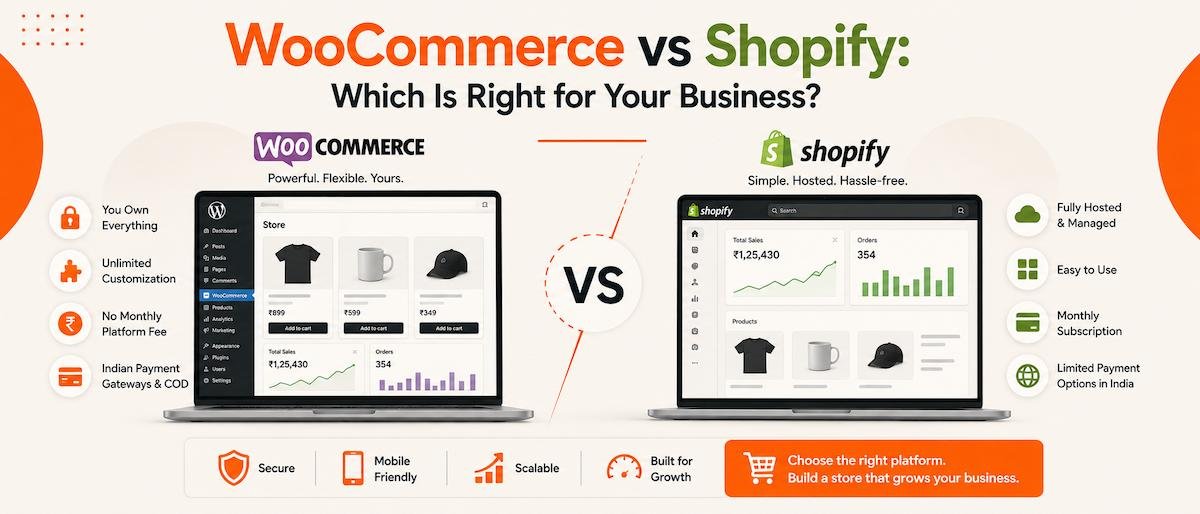
WooCommerce is a free, open-source plugin that turns a WordPress site into a fully featured online store. You own the platform, the code, and the data outright.
Shopify is a hosted, all-in-one e-commerce platform — you rent the platform through a monthly subscription, and Shopify handles the hosting, security, and infrastructure for you.
That single difference — own vs. rent — is the root of almost every other difference between them.
Ownership and Cost Structure
WooCommerce itself is free, but you pay for hosting, a domain, and (usually) some premium plugins or a developer to set it up properly. There’s no mandatory monthly platform fee — your ongoing costs are hosting and maintenance, which you control.
Shopify charges a recurring monthly subscription regardless of how much you sell, plus transaction fees if you don’t use Shopify Payments. It’s predictable, but it’s an ongoing cost that never goes away, and switching away from Shopify later can mean rebuilding your store from scratch on a new platform.
With WooCommerce, you’re building an asset you own. With Shopify, you’re renting a storefront on someone else’s platform.
Customisation and Design Freedom
Because WooCommerce runs on WordPress, you have full access to the underlying code, thousands of plugins, and custom development options — you can build almost anything, including a headless setup with React if you eventually need something more advanced.
Shopify is more restricted by design — you customise within its app ecosystem and theme system, which is easier for non-developers to manage but hits a ceiling faster if you want something genuinely custom.
Payment Gateways in India
This is where the comparison gets very practical for Indian businesses. WooCommerce integrates cleanly with Razorpay, PayU, CCAvenue, and most other India-first payment gateways, as well as COD (cash on delivery) — a big deal for Indian e-commerce.
Shopify’s native payment options are more limited for the Indian market, and Shopify Payments isn’t available in India at all, meaning you’ll rely on third-party gateways either way — often with extra Shopify transaction fees stacked on top.
💡 Worth Knowing
For India-focused stores specifically, WooCommerce’s flexibility with local payment gateways and COD is one of the most underrated advantages over Shopify.
Scalability and Long-Term Growth
WooCommerce scales through better hosting, caching, and, when needed, custom development — there’s effectively no ceiling if it’s built and maintained properly. Shopify scales too, but you’ll move up its pricing tiers (or to Shopify Plus) as you grow, and you remain within its walled ecosystem.
If you’re planning to eventually integrate custom logistics, an ERP, or a highly specific checkout flow, WooCommerce generally gives you more room to build exactly what you need.
Maintenance and Who Manages What
Shopify handles hosting, security patches, and uptime for you — that’s part of what the subscription pays for. WooCommerce puts that responsibility on you (or your developer): updates, backups, security monitoring, and hosting all need to be actively managed.
That’s not necessarily a downside — it just means WooCommerce stores benefit from an ongoing maintenance plan, just like a custom WordPress website.
Which One Should You Choose?
- Choose WooCommerce if: you want full ownership of your store and data, need strong support for Indian payment gateways and COD, want deep customisation, and are comfortable with (or have help with) ongoing maintenance.
- Choose Shopify if: you want a fully managed, hands-off platform, are comfortable with a fixed monthly cost, and don’t need heavy customisation beyond its app ecosystem.
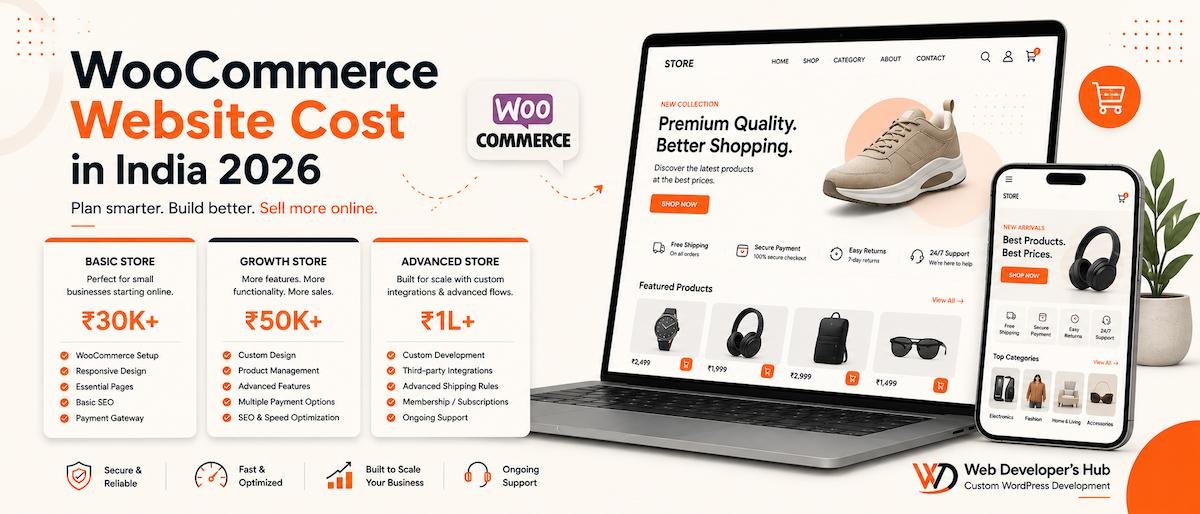
For most Indian small and mid-sized businesses — especially those relying on COD or local payment gateways — WooCommerce tends to be the more cost-effective, flexible choice long-term. I specialise in exactly this kind of build — see my E-commerce Development service for what’s included, or browse real examples in my portfolio. If you’re comparing the investment involved, also see the WooCommerce website cost guide for India.
🚀 Weighing WooCommerce vs Shopify for your store?
I can walk you through what fits your specific products, budget, and growth plans — no pressure toward either platform, just an honest recommendation. Let’s talk about your store →
Frequently Asked Questions
Is WooCommerce better than Shopify for Indian businesses?
For many Indian businesses, yes — WooCommerce integrates more cleanly with local payment gateways like Razorpay and PayU, supports cash on delivery easily, and avoids Shopify’s recurring subscription and transaction fees.
Is WooCommerce really free?
The WooCommerce plugin itself is free, but you’ll still pay for hosting, a domain, and typically some premium plugins or development work to set it up properly — there’s just no mandatory monthly platform fee.
Which is easier to use, WooCommerce or Shopify?
Shopify is generally easier for non-technical users to set up and manage day-to-day, since it’s a fully hosted, all-in-one platform. WooCommerce has a steeper learning curve but offers far more control and customisation once it’s properly set up.
Can I switch from Shopify to WooCommerce later?
Yes, though it typically involves migrating your product catalogue, customer data, and rebuilding your store’s design and functionality on WordPress, since the two platforms don’t share the same underlying structure.
Does WooCommerce support cash on delivery (COD)?
Yes, COD is natively supported in WooCommerce and is straightforward to set up, which is a significant advantage for many Indian online stores compared to Shopify’s more limited native payment options in India.